Era
Craftsman / Arts & Crafts
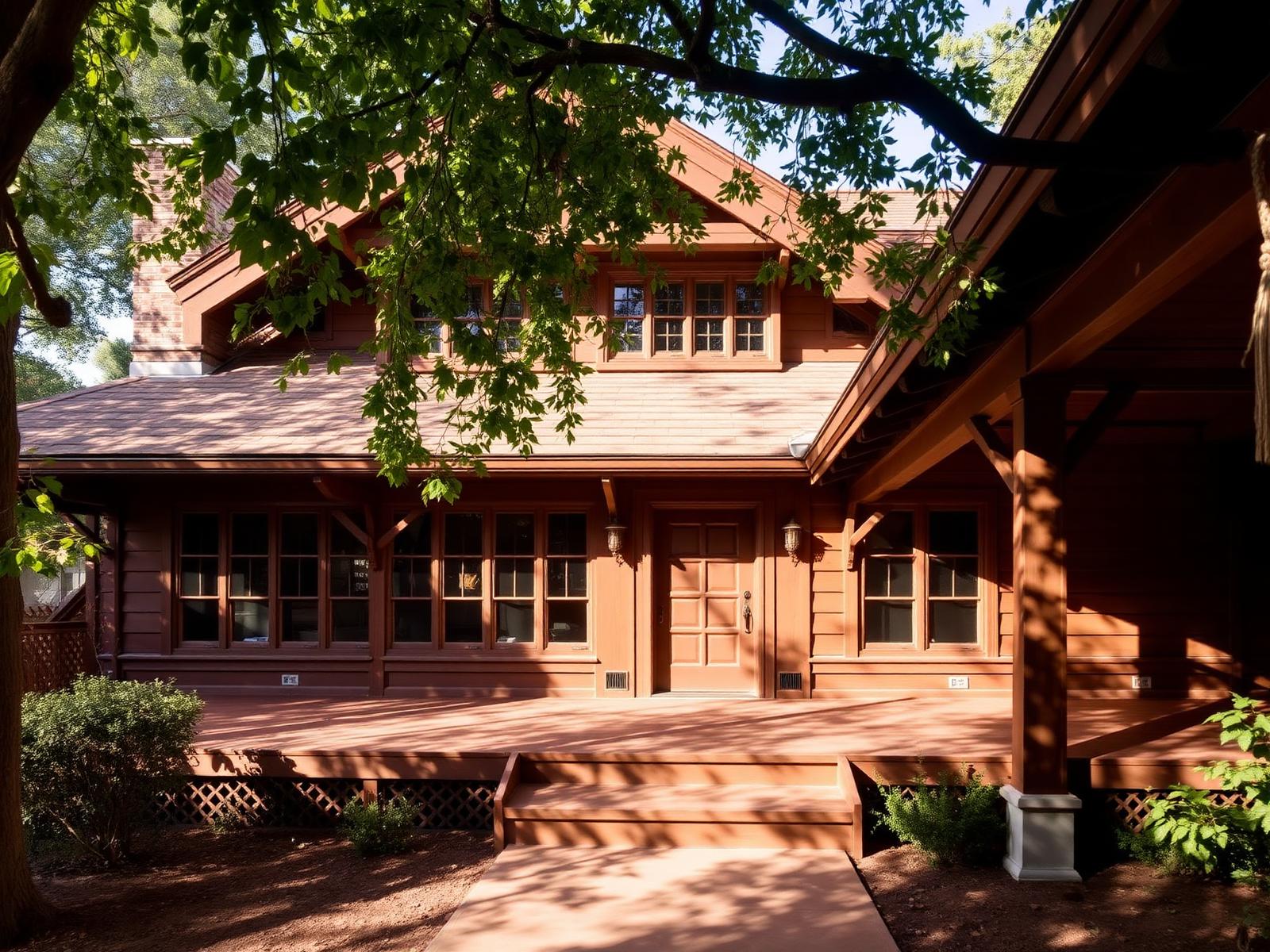
The Gamble House (1908) by Greene & Greene is the temple. Bungalow Heaven, a 16-block historic district, is the congregation — over 800 modest masterpieces of joinery, exposed rafters, and deep porches.
History & Architecture
Long before HGTV made Craftsman homes a nationwide obsession, Pasadena was the movement's beating heart — and it never really stopped beating.
The Greenes
In 1908, brothers Charles and Henry Greene completed the Gamble House for the soap-fortune family of David and Mary Gamble. Every joint, lantern, and stained-glass panel was custom. The result: one of the most significant works of American architecture ever built — and, briefly, Doc Brown's house.
That same Arts & Crafts spirit fans out across the city. South of Orange Grove, Bungalow Heaven preserves more than 800 modest homes from the 1900s–1930s, each one a quiet argument for living simply, beautifully, and outdoors.
Architecture showcase
Era
The Gamble House (1908) by Greene & Greene is the temple. Bungalow Heaven, a 16-block historic district, is the congregation — over 800 modest masterpieces of joinery, exposed rafters, and deep porches.
Era
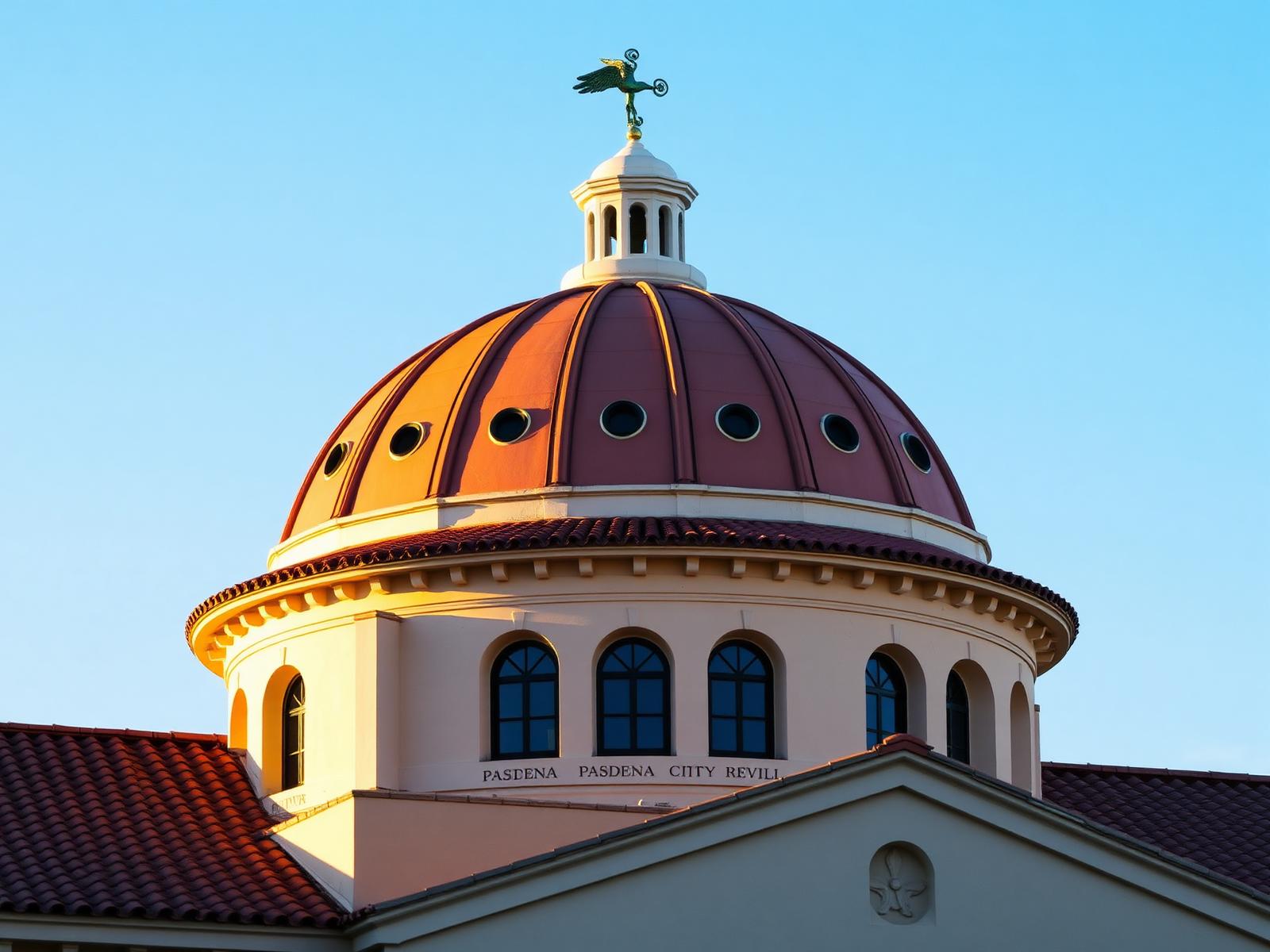
Pasadena City Hall (1927) crowns the Civic Center with a tiled dome that rivals anything in Andalusia. Stucco, tile, wrought iron — the romantic California of the postcard.
Era
The Colorado Street Bridge (1913) — 1,500 feet of curving concrete arches across the Arroyo Seco, lit at dusk like a string of opera boxes hung over a canyon.
Era
Route 66 left a trail of starburst signs and tilted rooflines along Colorado Boulevard. Look up; the atomic age never fully left.
The Newsletter
Local events, new restaurant openings, hidden gems, and insider tips — delivered every Sunday morning with your coffee.